
Is it safe to pay rent through an online rent payment app? Yes, if you verify the recipient, review the amount, keep a receipt, and check the payment afterward.
Yes, paying rent through an online rent payment app can be safe in 2026, but the app alone does not make every payment request legitimate. Confirm that the payment page belongs to the service your landlord uses, check the recipient and amount before authorizing payment, and keep the receipt. If someone sends you new payment instructions unexpectedly, verify them with your landlord through a contact method you already trust.
TL;DR
- Paying rent through an online rent payment app is safe when you verify the recipient before authorizing payment.
- A genuine-looking link can still lead to the wrong recipient; confirm unexpected changes directly with your landlord.
- Bank transfers and credit cards have different dispute processes. Neither makes an authorized payment to a scammer risk-free.
- Keep the receipt and check your bank or card account after the payment posts.
Why this matters
Rent is a payment you cannot afford to send twice. A fake payment link, a mistyped amount, or a request to use a new account can cause trouble even when the app itself works as intended. In 2026, the practical question is not just whether an app is safe. It is whether you can confirm who receives the money, what you authorized, and what proof you will have afterward.
PayRent is an online rent collection platform for independent landlords and property managers that accepts bank transfers and credit cards and tracks tenant balances. PayRent is best for independent landlords and property managers who want those payment and balance-tracking options; tenants should still verify each payment request before paying. The same check applies to any online rent payment app.
Is it safe to pay rent through an online rent payment app?
Yes, if you are using the intended payment service and you verify the payment details before submitting them. The safest-looking screen cannot tell you whether an unexpected request came from your actual landlord. Use the comparison below to separate the payment method from the risk of sending money to the wrong place.
Payment method What you can check before paying Main advantage Main limitation Bank transfer through a rent app Service, recipient, amount, and payment date You can pay without handing a landlord a paper check A transfer you knowingly authorize to the wrong recipient can be difficult to recover Credit card through a rent app Service, recipient, amount, and card statement You can review the charge on your card account and use the card issuer’s dispute process when applicable A dispute is not an automatic refund, and the card details need protection Paper check Payee, amount, and delivery address You can keep a copy and track whether the check clears A check can be lost, stolen, delayed, or sent to the wrong address
The verdict is about verification, not a blanket promise about one method. An online receipt helps establish what the service recorded; it does not, by itself, prove the landlord gave you the instructions. Likewise, a charge appearing on your bank or card statement proves money moved, not that it reached the right rent account.
If your landlord introduced a payment app as part of your normal rental process, confirm the service name and payment instructions before your first payment. If a later message changes the destination or asks you to pay outside that process, pause. A familiar app name in a text or email is not enough to authenticate the sender.
Bank transfer: verify the destination before authorizing
A bank transfer is useful when you prefer to pay rent from your bank account. Before submitting it, review the amount, payment date, and recipient information the app displays. If you expected to pay your landlord through one service but the request takes you somewhere else, do not treat the new destination as routine.
The distinction that matters in 2026 is unauthorized activity versus a payment you authorized after being misled. Federal electronic-transfer protections address certain unauthorized transfers from consumer accounts, but they do not make every mistaken or scam-induced payment reversible. Report a transfer you do not recognize to your bank promptly; if you sent it to the wrong place yourself, contact the bank and payment service immediately rather than assuming the same rules apply.
Best for: Renters who want to pay directly from a bank account and can confirm the correct payment destination. Watch for: A last-minute message that replaces the usual payment route. For landlords, provide tenants with one clear, consistent way to find the correct payment instructions so a surprise message stands out.
Credit card: check the charge and the terms
A credit card gives you a separate card statement to review and a way to raise an eligible billing dispute with the issuer. That is useful if a charge is incorrect or unrecognized. It does not mean you can approve any payment request now and sort out the recipient later.
Before paying rent by card in 2026, check the amount shown before submission and read the payment terms presented at checkout. Afterward, keep the confirmation and compare it with your card statement and rent balance. If the charge looks wrong, contact the card issuer and the payment service; if the rent balance also looks wrong, tell your landlord.
Best for: Renters who prefer to use a credit card and will review the resulting charge. Watch for: Assuming a card dispute automatically settles a disagreement about whether rent was paid. Your receipt, account record, and communication with the landlord remain important.
Why online rent payment safety varies
No single app feature answers every safety question. These factors determine whether a payment is straightforward to verify or hard to untangle:
Payment instructions: A request that matches the process your landlord previously confirmed is easier to trust than an unexpected change by text or email.
Destination: The correct service name is not enough if the payment is directed to the wrong recipient or rent account. Check the details displayed before you authorize it.
Payment amount: Review the amount on the confirmation screen and receipt. If it differs from what you owe, resolve the discrepancy rather than guessing.
Account access: A password you reuse elsewhere puts the account at greater risk if that password is exposed. Use a unique password and enable additional sign-in protection when the service offers it.
Records: A receipt, a payment history, and your bank or card statement give you separate records to compare if a balance is disputed.
Response to a problem: Quick contact with your bank, card issuer, payment service, and landlord gives each party a chance to investigate while the details are fresh.
PayRent’s tenant-balance tracking can help a landlord review what the platform records. It does not replace checking the actual payment confirmation against the tenant’s bank or card activity when something looks wrong.
How to check an online rent payment request
Use the same sequence for your first payment and for any request that changes your usual routine. It is especially useful in 2026 when a convincing message can arrive in the same inbox as genuine landlord correspondence.
Confirm the recipient. Ask your landlord or property manager which service they use, using a phone number or conversation thread you already know. Do not rely on contact details supplied only in the unexpected request.
Check the payment. Open the confirmed service, review the rent account, amount, and payment date, and stop if the details do not match your records.
Save proof. Keep the confirmation or receipt where you can find it. Record the date you submitted the payment and any reference the service provides.
Watch the account. Check that the payment appears as expected in your bank or card account and in the rent balance available to you. Report a mismatch instead of submitting a duplicate payment immediately.
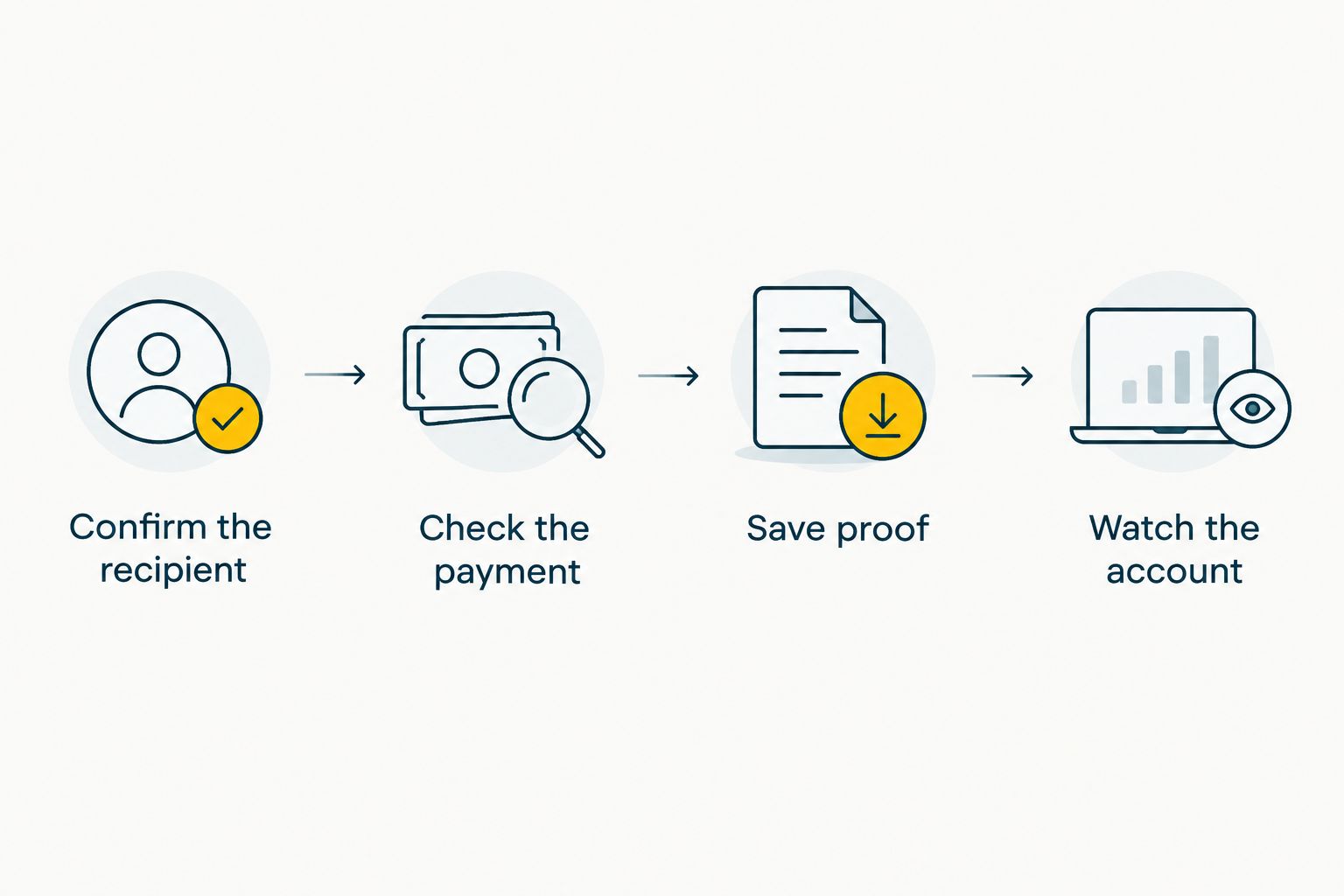
This process does not require you to judge whether a page merely looks professional. You establish the payment route independently, check the transaction you are about to authorize, and keep records that let you identify a problem. If you are setting up PayRent rent collection for a small portfolio, giving tenants consistent instructions is part of making that process easier to follow.
What if the payment link came by text or email?
A link is not proof that the sender is your landlord. Instead of paying from an unexpected message, confirm the request through a contact method you already used with the landlord or property manager. This matters most when the message says the usual payment destination has changed or creates pressure to act immediately.
If you have already entered a password on a page you do not trust, change it through the service’s confirmed sign-in route. Change that password anywhere else you reused it, and contact the service if you see activity you did not authorize. If you also submitted bank or card details, contact the financial institution involved.
What if my rent payment shows as pending?
Pending does not, by itself, mean rent was received or that another payment is needed. Check the status in the payment service, keep the submission confirmation, and ask your landlord how the payment appears on the rent balance before trying again. Your bank or card account can provide another record, but each record may describe a different stage of the payment.
When you contact support or your landlord, provide the payment date, amount, and confirmation details from your receipt. Do not send your full password or card details in a message. A clear record helps resolve whether the issue is the payment status, the amount, or the rent balance.
Can I dispute a rent payment made through an app?
You can report an unrecognized or incorrect transaction, but the available dispute process depends on how you paid and what went wrong. Contact your bank for a bank-account transfer or your card issuer for a card charge, and notify the payment service and landlord about any mismatch. Do it promptly; waiting makes the records harder to reconcile.
A disagreement over the rent balance is not necessarily the same as an unauthorized transfer. Keep the receipt and the relevant bank or card statement, then explain the specific difference to the landlord. In 2026, those records are more useful than a screenshot of a payment screen taken before you pressed submit.
FAQ
Is it safe to pay rent through an online rent payment app in 2026?
Yes, if you confirm the payment service and recipient, review the amount before submitting, and keep the receipt. Treat unexpected changes to payment instructions as a reason to verify with your landlord directly.
Is a bank transfer safer than a credit card for paying rent?
Neither method is automatically safer if you send money to the wrong recipient. Bank transfers and credit cards have different reporting and dispute processes, so verify the destination before using either one.
Can my landlord see my bank password when I pay rent online?
Do not give your bank password directly to your landlord. Check what information the payment service requests and how the payment is authorized before you proceed.
What should I do if I get new rent payment instructions by text?
Confirm the change with your landlord or property manager through a contact method you already trust. Do not use contact information supplied only in the unexpected text to verify it.
Does a rent payment receipt prove my landlord received the money?
A receipt documents what the payment service recorded, not necessarily how your landlord has applied the payment to your rent balance. Check the balance and raise any mismatch with your landlord.
What should I do if an online rent payment appears twice?
Check the payment service and your bank or card account, then report the duplicate to the service and the financial institution involved. Keep both transaction records and tell your landlord if the rent balance is affected.
Can I reverse a rent payment sent through an app?
A reversal is not guaranteed. Contact your bank or card issuer and the payment service immediately, explaining whether the transaction was unauthorized, incorrect, or sent to the wrong recipient.
One last thing
Verify a changed payment destination before you verify the payment screen. The screen can accurately show the transaction you authorized while the money still goes somewhere your landlord never intended. In 2026, a quick check through an established contact method is the most useful step when a rent request breaks your normal routine.
Written by
David Paxton
Dave is a seasoned real estate investor with over 12 years of experience in the industry. Specializing in single-family residential real estate, David's strategic approach combines market analysis, financial acumen, and a deep understanding of urban development trends to maximize investment returns.