

Can I collect rent from a cosigner or guarantor? Yes, if a signed agreement covers the debt. Learn what to check before requesting payment in 2026.
Yes, you can seek unpaid rent from a cosigner or guarantor if that person’s signed agreement makes them responsible for the debt and you follow the applicable lease terms and law. A cosigner is often directly liable under the lease; a guarantor’s obligation depends on the guarantee’s wording. Neither signature gives you permission to charge that person’s bank account or card without separate payment authorization.
TL;DR
- Can I collect rent from a cosigner or guarantor? Yes, if a signed agreement covers the unpaid rent and you follow applicable law.
- A cosigner often signs the lease; a guarantor’s separate promise can have different conditions and limits.
- PayRent is useful for tracking tenant balances, not for deciding whether a third party is legally liable.
- Check the agreement and ledger before requesting payment. Do not charge an account without authorization.
Can I collect rent from a cosigner or guarantor?
Yes, when the signed documents make that person responsible for the rent you are seeking. In 2026, start with the signature and the exact obligation it creates, not the label beside the person’s name. A person listed as an emergency contact, for example, does not become responsible for rent merely by appearing on a rental form.
Person What to check first Main limit Cosigner Whether the person signed the lease as someone responsible for rent The lease terms and applicable law determine the scope of that responsibility. Guarantor Whether the person signed an enforceable guarantee covering this tenant and obligation The guarantee can set conditions, a maximum obligation or an end date.
The answer changes if the paperwork changes. A landlord who calls someone a guarantor but has only that person’s name on an application needs to establish what, if anything, the person agreed to pay. A signed promise covering rent calls for a different assessment than an unsigned contact field.
Why this matters
Chasing the wrong person wastes time and risks turning a straightforward balance into a dispute about the paperwork. PayRent is best for independent landlords who need to track tenant balances; it does not determine whether a cosigner or guarantor owes them. Keep the balance record separate from the legal question. The first shows what remains unpaid; the signed agreement determines whom you can ask to pay it.
That distinction also protects you from treating a payment method as consent. Even if someone agreed to answer for unpaid rent, that agreement alone does not authorize you to debit their account. Collection responsibility and payment authorization are separate questions.
What should I check before asking for payment in 2026?
Work through the documents in order. Do not send a demand based solely on the title “cosigner” or “guarantor.” Read what the person signed, match it to the unpaid charges, then follow any required notice process.
Read the agreement. Find the cosigner’s signature on the lease or the guarantor’s signature on a separate guarantee. Check which tenant, property, lease term and obligations the document identifies. Look for conditions that must occur before you can seek payment.
Reconcile the ledger. Identify the unpaid rent by due date and record payments, credits and adjustments already applied. Separate rent from other charges. Do not add a fee or damage claim to the request unless the signed documents and applicable law support it.
Send the request. Follow the agreement’s notice instructions and any applicable legal requirements. State the amount sought, what it covers and how you calculated it. Keep the request consistent with the obligation the person actually signed.
Document the response. Keep copies of the request, delivery record, reply and any payment. Update the tenant balance when money arrives so you do not seek the same amount twice.
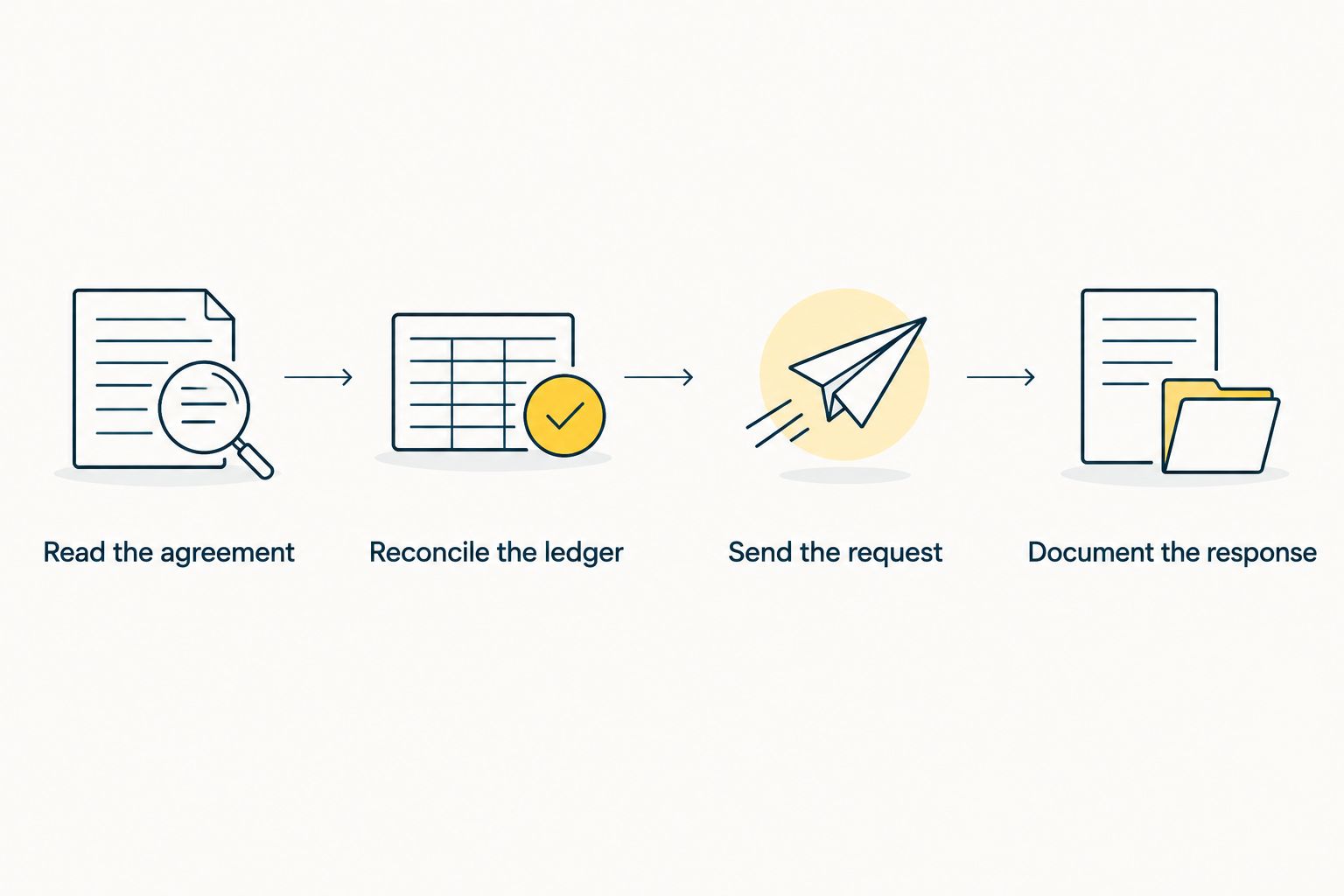
The documents matter most when they disagree with your expectations. A guarantee might cover rent but not other charges, or apply only to a stated period. A cosigner’s responsibility might be described in the lease itself. In either case, the amount you request needs to follow the signed terms and applicable law, not a standard message you send to everyone with an overdue balance.
If a signature, coverage period or notice requirement is unclear, resolve that issue before escalating the request. A clean ledger cannot fix a missing obligation, and a signed obligation cannot fix an inaccurate ledger.
How is a cosigner different from a guarantor?
A cosigner often signs the rental agreement alongside the tenant and accepts responsibility under that agreement. A guarantor typically signs a promise to answer for specified tenant obligations, sometimes under conditions written into a separate document. The signed terms control; the labels alone do not.
For a cosigner, read the lease provisions on who owes rent and how responsibility is shared. For a guarantor, read the guarantee for its trigger, scope and limits. Do not assume the guarantor must pay every charge on the tenant’s account, or that you must take the same steps before approaching every cosigner. The agreement and applicable law decide both questions.
This difference matters when a tenant makes a partial payment. The ledger establishes what remains unpaid, but the third party’s document establishes whether that remaining amount falls within their obligation. Record the payment before preparing a new request.
Why does the answer vary in 2026?
The right to seek payment depends on the agreement and the circumstances of the missed rent. Check these factors before treating a third party as responsible:
Who signed what. A signed lease, a separate guarantee and an application serve different purposes. Identify the document that creates the payment obligation.
Which rent is covered. Match the missed payment to the tenant, property and period described in the signed document.
What triggers responsibility. Read any requirement to notify the tenant, notify the guarantor or take another step before requesting payment.
Which charges are included. Rent, fees and other amounts need their own support in the agreement and under applicable law.
Whether the obligation has limits. Check for a stated cap, end date or restriction tied to the lease term.
Which rules apply. State and local law can affect the agreement and the steps available to collect a debt.
These are checks, not a reason to wait indefinitely. They tell you which claim you can make and what records support it. In 2026, an accurate request is more useful than a fast request sent to someone whose obligation you have not confirmed.
Can I ask a guarantor to pay before asking the tenant?
Only if the guarantee and applicable law allow it. Some guarantees specify a condition or notice step before you can seek payment from the guarantor. Read that language before deciding who receives the first request.
If the document requires you to notify the tenant or establish a missed payment first, follow that sequence and keep the record. If it does not spell out a sequence, do not invent one from the word “guarantor.” Confirm the applicable requirements before sending a demand.
Can I charge a cosigner’s card or bank account for missed rent?
No, not on the strength of a cosigner agreement alone. Responsibility for rent does not by itself authorize a card charge or bank transfer. Obtain and follow the payment authorization required for the method you use.
A signed lease answers whether the cosigner owes the money; a payment authorization answers whether you can use a particular account to collect it. Keep those records separate in 2026. If the cosigner chooses to pay another way, record the payment against the correct tenant balance.
Does a guarantor owe late fees as well as rent?
Only if the signed guarantee covers those charges and applicable law permits them. A guarantee of rent does not automatically establish responsibility for every line on the tenant’s ledger. Check each charge against the document before including it in a request.
Itemizing the balance makes that check easier. Show unpaid rent separately from any other amount rather than sending one unexplained total. It gives the recipient a clear basis to review the request and gives you a record of exactly what you sought.
FAQ
Can I collect rent from a cosigner or guarantor?
Yes, if a signed agreement makes the person responsible for the unpaid rent and you follow its terms and applicable law. Check the exact obligation before requesting payment.
Is a cosigner automatically responsible for missed rent?
No; confirm what the cosigner signed and what the lease says about rent responsibility. A name on an application or contact form is not, by itself, a promise to pay.
Does a guarantor have to pay everything the tenant owes?
No; the signed guarantee determines which obligations it covers, subject to applicable law. Check for limits on charges, amount, conditions and duration.
Do I have to contact the tenant before the guarantor?
Follow the guarantee’s conditions and applicable law. Check for required notice or other steps before asking the guarantor to pay.
Can I take payment from a cosigner’s bank account?
Not without the authorization required for that payment method. A promise to cover rent and permission to debit an account are separate matters.
What records should I keep when asking a guarantor to pay?
Keep the signed guarantee, an accurate itemized balance, copies of notices and a record of responses and payments. Apply any payment to the tenant balance so the amount sought stays accurate.
Does a lease renewal keep the original guarantee in effect?
Check the guarantee and renewal documents before relying on it for renewed-term rent. The covered term and any extension language determine what the person agreed to, subject to applicable law.
One last thing
A guarantor’s signature can be real while the particular rent you want to collect falls outside the period or charges that signature covers. Before making a 2026 request, match the signer, the covered term and the unpaid rent. That check is more useful than a template demand: it tells you whether you have a claim against that person and which amount your records can support.
Written by
David Paxton
Dave is a seasoned real estate investor with over 12 years of experience in the industry. Specializing in single-family residential real estate, David's strategic approach combines market analysis, financial acumen, and a deep understanding of urban development trends to maximize investment returns.